Demonstration dataset · Synthetic records · Not real security assessments
COLDGUARDResearch Observatory

About

A public interest research observatory

Cold Chain Observatory for Logistics, Defense, Governance, Uptime, Assurance, Resilience, and Disclosure

Introduction

The cold chain runs on software now.

Vaccines, blood, plasma, and fresh food survive only while their temperature is held. The machines that hold it, and the systems that schedule, ship, and account for it, are networked, which means they can be attacked, and have been.

COLDGUARD is an academic observatory that puts the public evidence of that risk on a map. It tracks cold storage, food logistics, blood storage, and blood banking, country by country, across every continent except Antarctica. Each verified event on the Findings ledger traces to a source the team re-opened, and the ledger says plainly what each source does not say.

It is not a scanner, a rating, or a leaderboard. No organization is scored, no actor is named, and an empty country page means undocumented, never safe. The rest of this page explains who builds it, how records are reviewed, and how to correct us.

Illustration of a cold chain: refrigerated storage, transport, and a blood bank, with a temperature trace. Decorative; it encodes no data.

Storage, transport, clinical use: one temperature-dependent chain, now networked end to end. Illustration.

Verified events
3
re-opened 2026-11-08
Sectors
4
cold storage · food logistics · blood storage · blood banking
Country pages
249
6 continents, Antarctica excluded
Scores assigned
0
by design, see Principles

Mission

COLDGUARD is a geographically navigable research observatory of publicly documented cyber risk signals affecting temperature controlled and blood supply infrastructure. It combines organizations, facility categories, reported incidents, public security disclosures, and research evidence, with explicit attention to uncertainty and coverage.

Development status

Every continent except Antarctica is navigable. Reviewed records currently exist only for North America and Europe; other countries display an honest zero-record state. The application currently runs on a clearly labeled synthetic demonstration dataset; no real organization, incident, or security evaluation is described. Real records enter only through the licensed import adapters and the editorial review workflow described in the methodology.

Principles

  • Traceability. Every claim has a source with a grade and dates.
  • Uncertainty. Unknown is represented as unknown, never as safe.
  • Responsible disclosure. No scanning, no targeting detail, correction paths on every record.

Governance

Named-entity findings require source validation, sensitivity screening, and human approval, with second-person review for high consequence allegations involving clinical or operational systems. Publication changes are audited; corrections and retractions are visible.

Investigator and affiliation

Principal investigator: Shreyas Kumar. Institutional affiliation pending approval. No funding, endorsement, partnership, or award is claimed.
Team

The Research Team

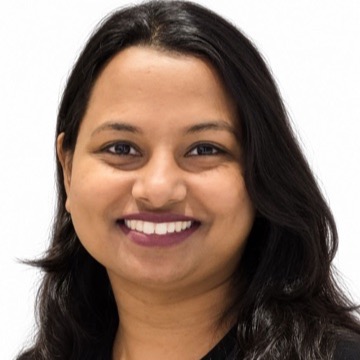
The observatory is built and reviewed by a small academic team. Every published record names its reviewer internally; corrections reach the team through the contact page.

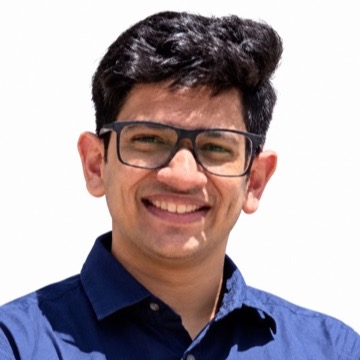
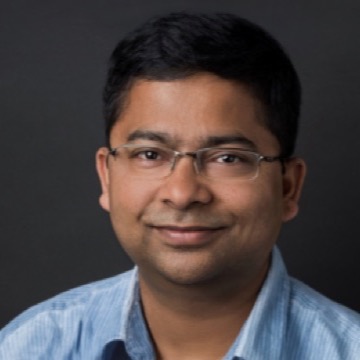
  • Portrait of Shreyas Kumar

    Shreyas Kumar

    Principal investigator · Professor of Practice

    LinkedInScholar

    Research interests
    • Cybersecurity and cyber law
    • Critical infrastructure resilience
    • Public evidence methodology
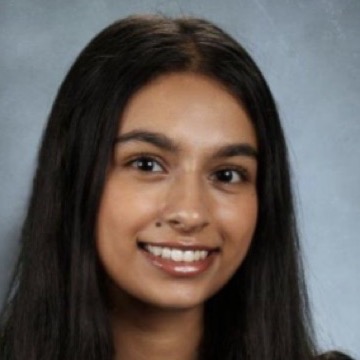
  • Portrait of Saumya Sinha

    Saumya Sinha

    Graduate student

    LinkedIn

    Research interests
    • Fraud prevention
    • Risk modeling
    • Supply chain resilience
  • Portrait of Chirag Mahajan

    Chirag Mahajan

    Graduate student

    LinkedIn

    Research interests
    • Fraud prevention
    • Risk modeling
    • Supply chain resilience
  • Portrait of Adwait Hegde

    Adwait Hegde

    Graduate student

    LinkedIn

    Research interests
    • Fraud prevention
    • Risk modeling
    • Supply chain resilience
  • Portrait of Bhagyashree Patil

    Bhagyashree Patil

    Graduate student

    LinkedIn

    Research interests
    • Fraud prevention
    • Risk modeling
    • Supply chain resilience
  • Portrait of Sanskriti Singh

    Sanskriti Singh

    MIT

    LinkedIn

    AI for cybersecurity

  • Portrait of Devkumar Banerjee

    Devkumar Banerjee

    Undergraduate researcher

    LinkedIn

    Healthcare Security · National security

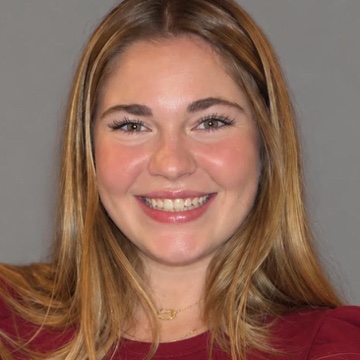
  • Portrait of Alexis Bohner

    Alexis Bohner

    Undergraduate researcher

    LinkedIn

    Healthcare Security

  • Portrait of Reyaansh Gadia

    Reyaansh Gadia

    Intern

    Small business security

  • Shaurya Sinha

    Intern